

Form 15 vs. Form 16 in Karnataka: Understanding the Encumbrance Certificate System
When conducting property due diligence in Karnataka, one of the most critical documents buyers, developers, and legal advisors rely on is the Encumbrance Certificate (EC). This certificate acts as evidence of the financial and legal status of a property.
However, when applying for an EC, the result can either be Form 15 or Form 16, depending on whether the property has any encumbrance during the specified period. Many buyers misunderstand these terms, assuming an EC automatically means a “clean” title. This article clears the confusion around Form 15 vs. Form 16 in Karnataka’s revenue system.
🧾 What is an Encumbrance Certificate (EC)?
An Encumbrance Certificate is an official record issued by the Sub-Registrar Office (SRO) that lists all registered transactions related to a property, such as:
- Sale deeds
- Gift deeds
- Mortgage deeds (including bank loans)
- Lease agreements
- Court attachments or legal claims
It’s generally applied for to check the title history for a specific period — most commonly 13 years or 30 years.
📄 What is Form 15? (Encumbered Property)
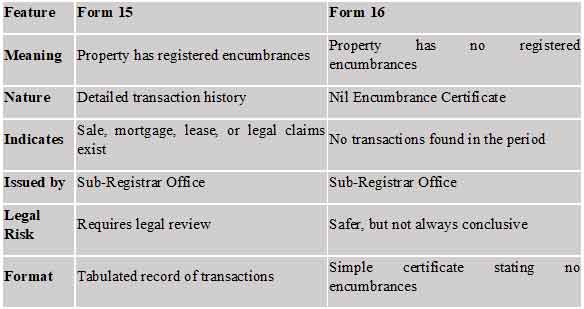
Form 15 is issued when there are registered encumbrances on the property during the searched period.
🔍 Key Highlights:
- Shows that the property has been involved in one or more registered transactions (like a mortgage, sale, lease, or court order).
- Details include:
- Nature of transaction (sale, mortgage, lease, etc.)
- Names of parties involved
- Document number and registration date
- Extent and survey numbers
This form does not necessarily mean the title is defective, but it signals that further legal verification is required — especially for mortgages, attachments, or court cases.
📃 What is Form 16? (Nil Encumbrance Certificate)
Form 16 is issued when there are no registered transactions affecting the property during the searched period. It is commonly known as a “Nil EC.”
✅ Key Highlights:
- States that the property has not been subject to any registered encumbrances during the selected period.
- Useful when:
- Verifying an ancestral or undisturbed property
- Ensuring there are no bank loans or claims
- Confirming legal clarity before sale or purchase
Important: Form 16 only includes registered transactions. Unregistered dealings, oral agreements, or family partitions may still exist and must be checked separately.
🆚 Form 15 vs. Form 16: Summary Table
📌 Limitations You Should Know
While Form 16 may appear to provide a clean bill of health for a property, it’s not foolproof. Here’s why:
- Only registered documents are reflected. Any unregistered mortgage or oral lease will not show up.
- Court litigation, especially civil suits or injunctions, may not be registered and won’t be visible.
- Power of Attorney (PoA) transactions may not always be listed unless registered.
- Time period limits: You only get data for the years you specify while applying for the EC.
🔐 Legal Best Practices
- Always apply for a 30-year EC (or since the first title deed) to ensure full visibility.
- Check the RTC, mutation records, and Khata alongside the EC for ownership confirmation.
- For Form 15: Engage a property lawyer to interpret the nature and risk of the encumbrances.
- Even if you receive Form 16: verify other unregistered liabilities, such as:
- Family claims
- Inheritance disputes
- Undocumented possession
Understanding the difference between Form 15 and Form 16 is essential when reviewing the Encumbrance Certificate during any property transaction in Karnataka. While Form 15 flags existing registrations, Form 16 suggests a cleaner slate, though it should not be the sole basis for title clearance.
At RealtyLegal, we offer expert title verification, EC analysis, and legal due diligence for properties across Karnataka. Whether you’re buying land or a built-up property, let us help you verify what’s beneath the paperwork.
🔍 Need a professional opinion on your property EC? Contact RealtyLegal for a document review today.